Free Shipping and COD All Over India.
For more than a decade, smartphones have followed the same formula: bigger screens, more powerful processors, better cameras, more apps, and increasingly sophisticated AI features.
But something unexpected is happening.
While smartphones are becoming more advanced, some consumers are moving in the opposite direction. They are looking for simpler phones with fewer distractions.
This is where dumb phones and minimalist phones come in.
In 2026, the dumb phone is no longer simply an old-fashioned keypad phone. Modern devices can combine physical buttons, compact designs, 4G connectivity, Android, messaging apps, navigation, and other essential functions while intentionally reducing the temptation to endlessly scroll.
Recent coverage shows that the digital-detox movement is attracting attention among younger users, including people who want to reduce their dependence on social media and smartphones.
So, what is the future of dumb phones?
The future probably isn’t about replacing every smartphone. Instead, dumb phones are likely to become a strong alternative for people who want technology without constant digital noise.
Quick Answer: What Is the Future of Dumb Phones?
The future of dumb phones is likely to focus on digital minimalism, essential connectivity, longer battery life, compact designs, privacy, and carefully selected smart features. Rather than competing directly with flagship smartphones, modern dumb phones can serve people who want fewer distractions while remaining connected.
The smartphone revolution solved many problems, but it also created a new one: constant connectivity.
A single smartphone can provide:
Having everything in one device is convenient, but it also makes the smartphone extremely difficult to put down.
The growing interest in dumb phones is partly a reaction to this environment. Recent reporting has highlighted people choosing simpler phones specifically to reduce social-media use and reclaim attention.
This doesn’t mean people hate technology.
Instead, many people want more control over how they use it.
One of the biggest changes in the future will be the evolution of the traditional dumb phone.
The next generation won’t necessarily be completely “dumb.”
Instead, we can expect phones that offer selected smart features such as:
The important difference will be intentional design.
Instead of giving users hundreds of apps, a minimalist phone can provide the functions they actually need while making unnecessary entertainment less accessible.
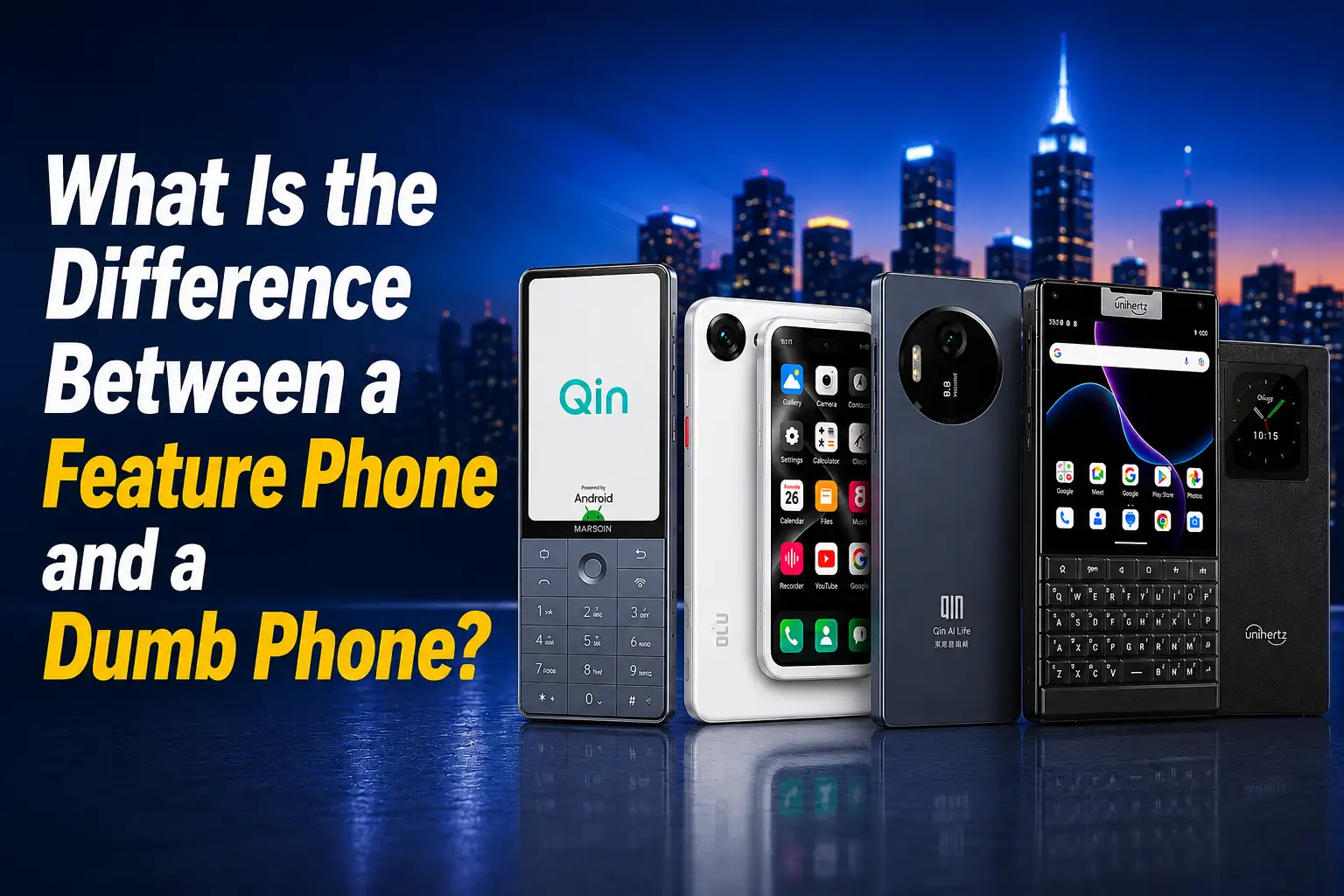
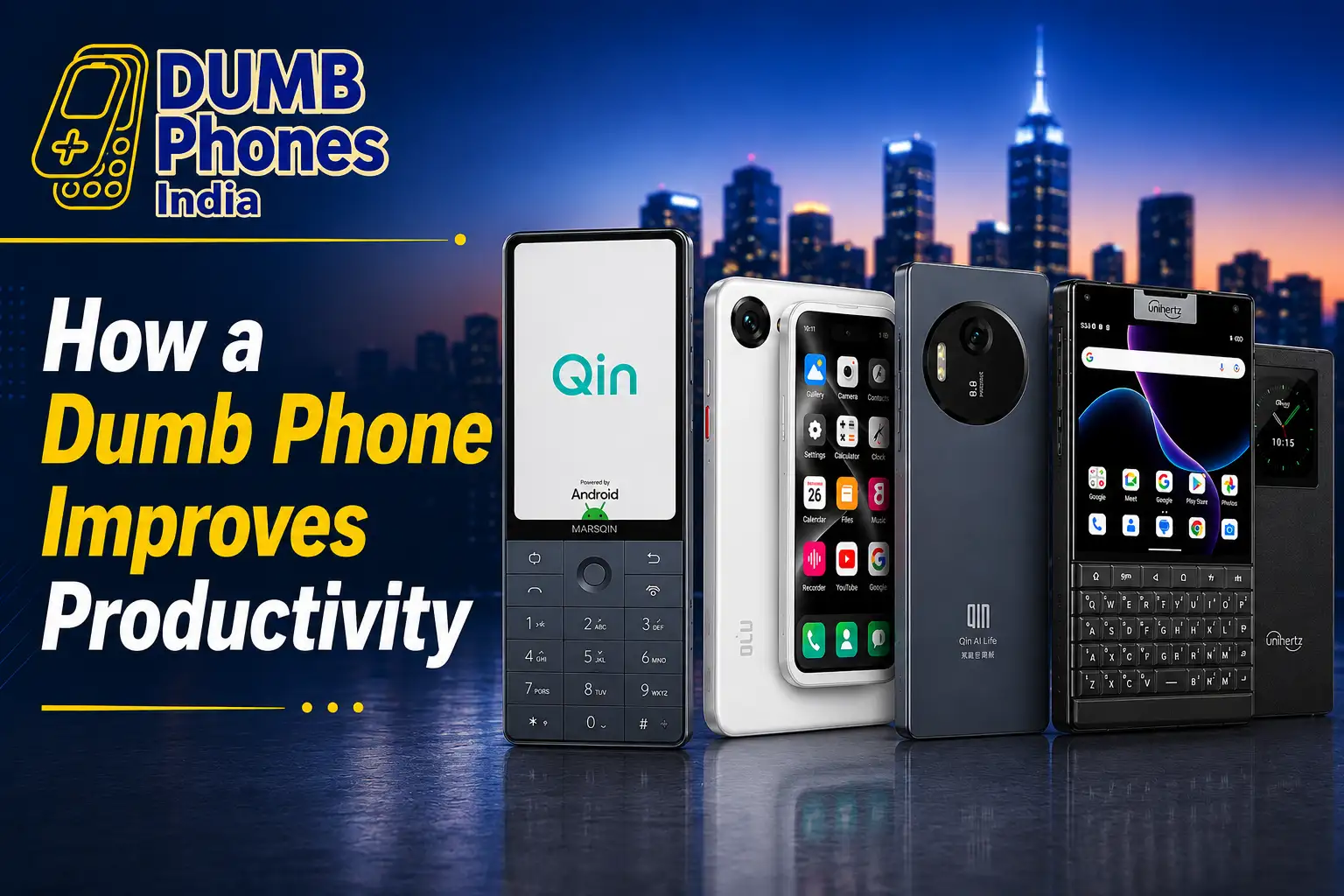
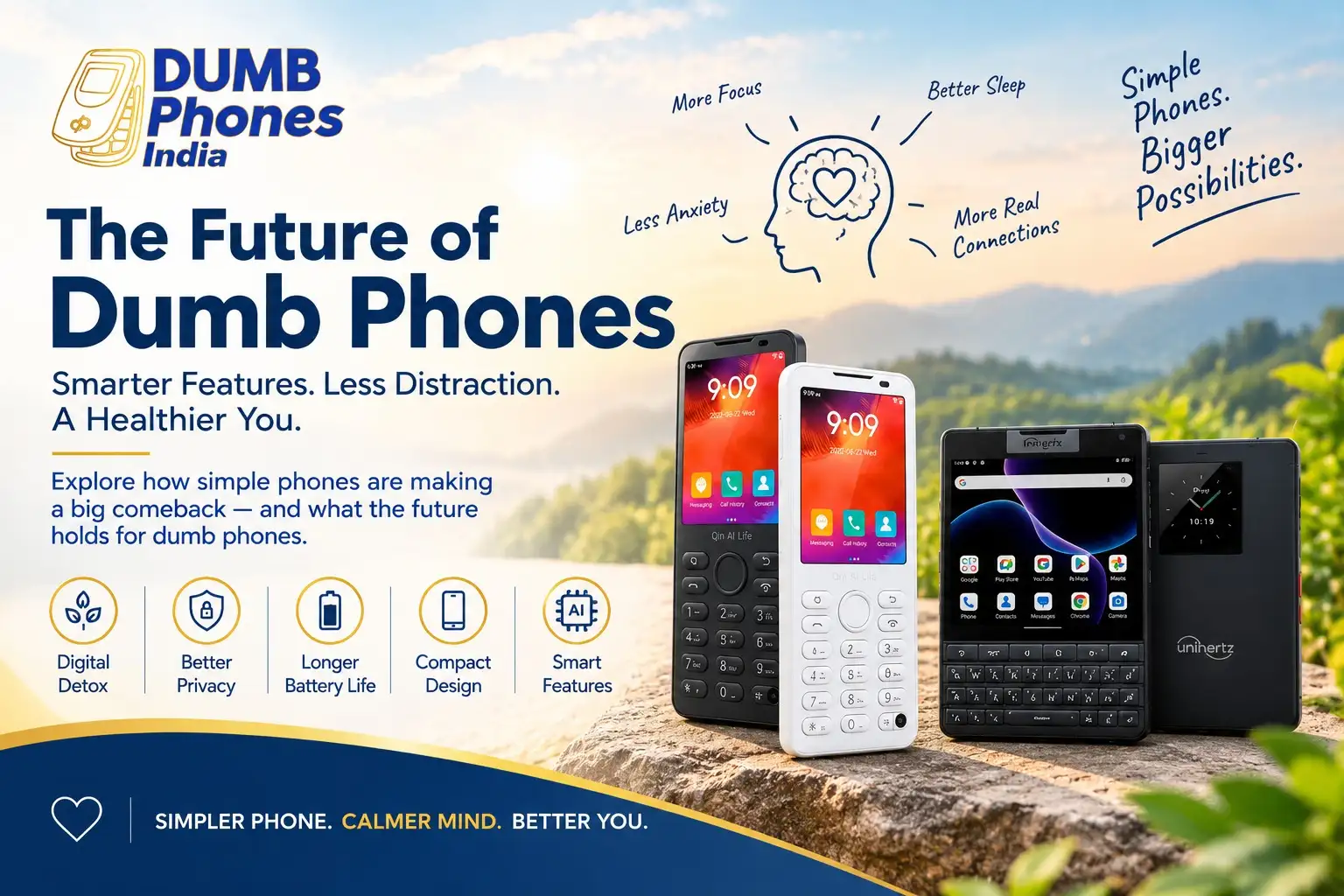
This middle ground is already visible in today’s market. DumbPhones India, for example, currently offers Android-based compact devices alongside keypad-focused phones, including Qin and Unihertz models.
In the past, people purchased phones primarily for communication.
In the future, digital wellbeing could become an equally important reason.
Imagine buying a phone because you want:
This is the philosophy behind digital minimalism.
Recent technology coverage describes the growing appeal of devices that intentionally do fewer things in order to reduce distractions and encourage more focused use.
For some users, a smaller or simpler phone can create a physical barrier between them and endless digital consumption.
Touchscreens dominate modern smartphones, but physical controls have an advantage: they make the phone feel like a communication tool rather than an entertainment screen.
Physical keypads can be useful for:
Qin devices available through DumbPhones India demonstrate this hybrid approach by combining compact designs with physical keypads and touchscreen functionality.
We may see future minimalist phones experiment with:
At first, AI and dumb phones sound like opposites.
But they could work surprisingly well together.
Instead of opening five different apps, a future minimalist phone could allow you to simply ask:
“Remind me to call Mom at 7 PM.”
Or:
“What’s the address of my meeting tomorrow?”
Or:
“Translate this message into Hindi.”
The idea would be to use AI for specific tasks instead of endless interaction.
This could create an interesting category:
AI-powered minimalist phones
These phones could have powerful assistance while keeping the interface intentionally simple.
The broader smartphone market is already moving heavily toward embedded AI features, suggesting that AI will become increasingly common across mobile devices.
The difference is that minimalist phones may use AI to reduce interactions, rather than encourage more screen time.
Another possible direction for the future of dumb phones is privacy.
A simpler phone can potentially reduce the number of apps, permissions, notifications, and online services connected to your daily life.
Future devices may offer features such as:
For users who don’t want their phone to become the center of their digital life, this could become increasingly attractive.
Modern smartphones have become physically large.
For many users, a smaller phone is attractive simply because it is:
The popularity of compact minimalist devices suggests that small size itself can become part of the digital-detox experience.
For example, the current DumbPhones India range includes compact Qin and Unihertz devices designed around a different experience from conventional large-screen smartphones.
This is perhaps the most important point.
The future is unlikely to be:
Smartphones disappear → everyone uses dumb phones.
Instead, we may see several categories of mobile users.
People who need:
People who primarily need:
People who want:
This third category could be particularly important for the future of Android dumb phones.
You don’t necessarily have to completely abandon your smartphone.
A dumb phone can become a secondary device.
For example:
Weekend phone
Leave your smartphone at home during weekends.
Travel phone
Carry a smaller device when you don’t need all your apps.
Work phone
Use a minimalist device for calls and essential communication.
Study phone
Give yourself fewer distractions while studying.
Outdoor phone
Use a compact, practical phone for trips and outdoor activities.
This approach allows users to keep their smartphone while creating boundaries around when they use it.
The ideal future dumb phone could combine:
|
Feature
|
Why It Matters
|
|---|---|
|
4G/5G
|
Reliable connectivity
|
|
Physical keypad
|
Easier, more intentional interaction
|
|
Small display
|
Less immersive
|
|
Android or lightweight OS
|
Essential app support
|
|
WhatsApp
|
Everyday communication
|
|
Navigation
|
Travel and directions
|
|
Long battery life
|
Less frequent charging
|
|
Strong privacy controls
|
Better digital control
|
|
AI assistance
|
Quick tasks without app overload
|
|
Compact design
|
Portability
|
The goal isn’t to make the phone completely incapable.
The goal is to make it capable without becoming addictive.
India has a unique opportunity for minimalist phones because users often need digital services such as messaging, payments, navigation, and online communication.
This means the future Indian dumb phone may need to provide a balance between:
Simple hardware + essential apps + reliable connectivity.
A phone that only makes calls may not be enough for many Indian consumers.
But a phone that provides every social media and entertainment app defeats the purpose of digital minimalism.
That’s why Android dumb phones could occupy an interesting middle ground.
DumbPhones India currently sells devices such as the Qin F21 Pro, Qin F22 Pro, Qin F22 without camera, Duoqin F25 Pro, Jelly Star, and Unihertz Titan 2, reflecting the growing variety within this category.
Probably not in the same way as smartphones.
But they don’t need to.
A niche doesn’t have to become the majority to become successful.
Dumb phones could become increasingly popular among:
The recent resurgence is already attracting attention from technology and mainstream media, with 2026 coverage describing dumbphones as part of a broader movement toward disconnecting from smartphones.
Dumb phones are unlikely to completely replace smartphones, but they have a strong future as minimalist, digital-detox, secondary, and distraction-reducing devices.
People are increasingly interested in reducing screen time, social-media use, notifications, and digital distractions.
Many modern Android-based minimalist phones already support essential apps. Future models may continue offering selected communication apps while keeping the overall experience simple.
Some future minimalist phones may adopt newer network technologies as 4G/5G availability and device requirements evolve. Support will depend on the specific model and market.
Yes. AI doesn’t require a phone to have a traditional smartphone-style experience. Future minimalist phones could use AI for tasks such as translation, reminders, voice assistance, and information retrieval.
They can be useful because they reduce access to distracting apps and make it easier to create boundaries around smartphone use.
Not always. Many are better described as minimalist or hybrid phones because they retain Android and selected smart features while offering a simpler, compact experience.
The future of dumb phones isn’t about going backward.
It’s about redefining what a phone should do.
Smartphones will continue becoming faster, more powerful, and more AI-driven. At the same time, a growing group of users may choose devices that deliberately do less.
That creates an exciting opportunity for dumb phones.
The next generation of minimalist phones could combine 4G/5G connectivity, essential Android apps, AI assistance, privacy-focused features, physical controls, compact hardware, and digital-wellbeing principles.
In other words, the future phone may not be the phone that does everything.
It could be the phone that helps you do only what you actually need.
And that’s why the future of dumb phones may be much bigger than nostalgia for old keypad phones. It’s potentially about creating a healthier balance between technology and real life.

Added to cart
Check out our shop to see what's available